
Is The Housing Hangover Finally Clearing?
What a Renewing Market Reveals About Households, Stability, and the Path Forward
For a few years now, the housing market has felt strangely suspended. Buyers were frustrated, sellers were hesitant, and real estate professionals were left trying to translate a market that many described as “soft,” even though prices barely moved. The truth is simpler. We weren’t in a soft market. We were in a hangover.
A recent analysis from Home Economics puts a clear frame around it. During the pandemic, America didn’t just see a housing boom. It experienced a massive acceleration of demand. People moved earlier than they planned to. They bought sooner than they expected. They reshuffled their lives all at once. That surge pulled years of normal transactions into a twenty-four month window.
Once the frenzy passed, the market didn’t collapse. It just went quiet. National home prices stayed firm, but the number of homes changing hands dropped to levels we hadn’t seen in over a decade. Households weren’t unwilling. They were exhausted.
Now, according to new data, roughly eighty-five percent of that excess activity has been absorbed. And the early signals of a market waking up are finally visible. Pending sales are declining more slowly than usual. Some regions are seeing atypical seasonal strength. Nothing dramatic, but unmistakably different from the stillness of the past couple years.
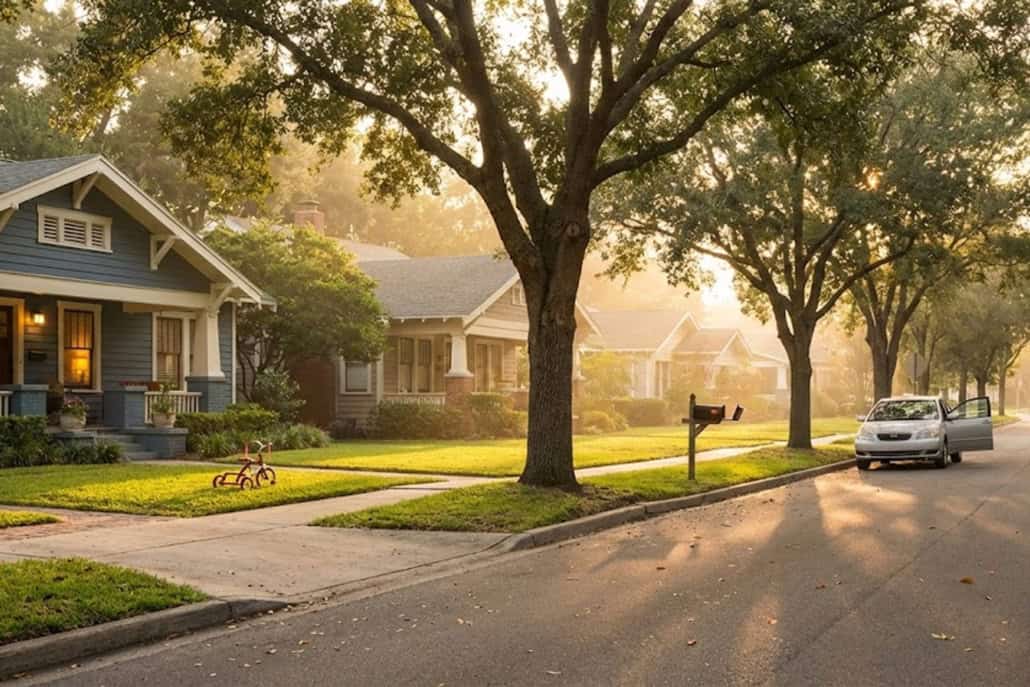
The fog is lifting.
Why prices held while activity fell
Housing behaves differently from most markets. When conditions worsen, prices often don’t fall the way economic theory predicts. Homeowners tend to hold firm, resisting the idea of selling at a discount. The adjustment happens instead through reduced activity. Fewer moves. Fewer listings. Longer periods of staying put.
Mortgage rate lock-in made this even stronger. When millions of households refinanced into two and three percent mortgages, they anchored themselves to a financial position too good to walk away from. Rising rates didn’t slow the market because people couldn’t afford houses. They slowed the market because people couldn’t afford to give up what they already had.
As a result, the next wave of listings will come from life itself. The classic 4 Ds remain the strongest driver of inventory: diapers, divorce, death, and diplomas. These moments continue regardless of interest rates or economic cycles, and they will shape the renewed flow of housing activity in the years ahead.
What this transition means for buyers and sellers
This next phase of the market won’t feel like the rush of 2021. It will feel like a gentle turning of the tide.
For sellers
Households that stayed frozen through uncertainty will revisit old decisions. The move they postponed might start to make sense again. It won’t be speculative. It will be practical.
For buyers
Opportunity windows are likely to open quietly. Inventory will grow in small steps. Competition will return in waves. Buyers who stay engaged — even in a challenging affordability environment — may find options appearing earlier than expected.
For investors
The emotional highs and lows of the pandemic cycle have faded. Solid underwriting matters again. Steady cash flow, property condition, location, and tenant stability are back to being the real indicators of long term value.
For real estate advisors
This is the moment to shift the narrative. The market isn’t frozen anymore. It’s recalibrating. Guidance rooted in context, not hype, will be the advantage that earns trust.
What the housing cycle exposes about household resilience
The past several years revealed something deeper than market mechanics. They exposed how fragile household-level decision making has become. A simple rise in interest rates was enough to trap millions of families in place. Not because they lacked courage or creativity, but because the structure of our economic life gives households very few levers to pull.
A healthy society shouldn’t grind to a halt because the cost of money changes.
Households deserve a greater margin for adaptation. They need more than the ability to consume the latest device or follow broad economic trends. They need the capacity to produce — to build skills, build stability, build networks, build financial buffers, and build the kind of internal strength that makes external shocks less defining.
When households shift even a small portion of their focus away from consumption and toward productive capacity, they gain room to maneuver. They become less vulnerable to rate cycles, job changes, supply shortages, and policy swings. They gain agency. They regain choice.
And that’s the quiet lesson of the past few years. The market didn’t simply cool off. It revealed how much stability households have surrendered to forces they can’t control.
Looking ahead
The clearing of this housing hangover is a good sign. A more balanced cycle is emerging. Households are starting to move again. Transaction volume is returning. But the larger lesson remains. If we want households to navigate the next decade with confidence, the solution won’t come from perfect interest rates or perfect timing.
It will come from strengthening the household itself.
Families, individuals, multigenerational homes, and chosen networks all deserve more resilience than the past cycle allowed them. The more we equip households to build stability on their own terms, the less they will be thrown off course by the next disruption.
Because in the end, the health of the housing market always reflects the health of the households inside it. And right now, those households are telling us something important. They’re ready to move again. They just need a little more room to breathe.

Dan is a real estate advisor serving the New Hampshire Seacoast and Southern Maine. He is driven by a passion for connecting more meaningfully with others and contributing toward their lasting success. Before entering real estate, he worked across a range of industries including publishing, consumer products, technology, manufacturing, investment banking and private equity.


